
Ever since I first arrived to Mexico – 38 years ago! – Día de Muertos has been my favorite festival. This particular mix of quiet love, grief and joy is so different than how I was raised to view death! The festival has undergone massive changes in the past couple of decades and especially in the past 10 years, and while I wish for the traditions to be respected and not invaded, I also celebrate the new aspects of public celebration – at least in Mexico City.
Traditionally, these few days when people’s loved ones are able to return and visit for a short while are very intimate, personal and private affairs in homes and at graves. Different areas of Mexico have their particular public rites and festivals linked to Muertos, but at its core it is a personal visit with one’s dear departed – not a place to take photos of people celebrating their beloveds who have passed away. I shudder at the thought of people streaming in to take pictures of families sitting at the grave of their sister – father – mother – son to visit with their memories for a while.
However, tradition and culture is also a dynamic and changing, living being. Twenty years ago, Día de Muertos was celebrated mainly among indigenous and rural Mexicans and traditional, often low-income, families in small towns and neighborhoods in some cities. It was not as common for modern, upper-class Mexicans to celebrate Día de Muertos. In part due to outside interest and in part due to local efforts, things started to change.
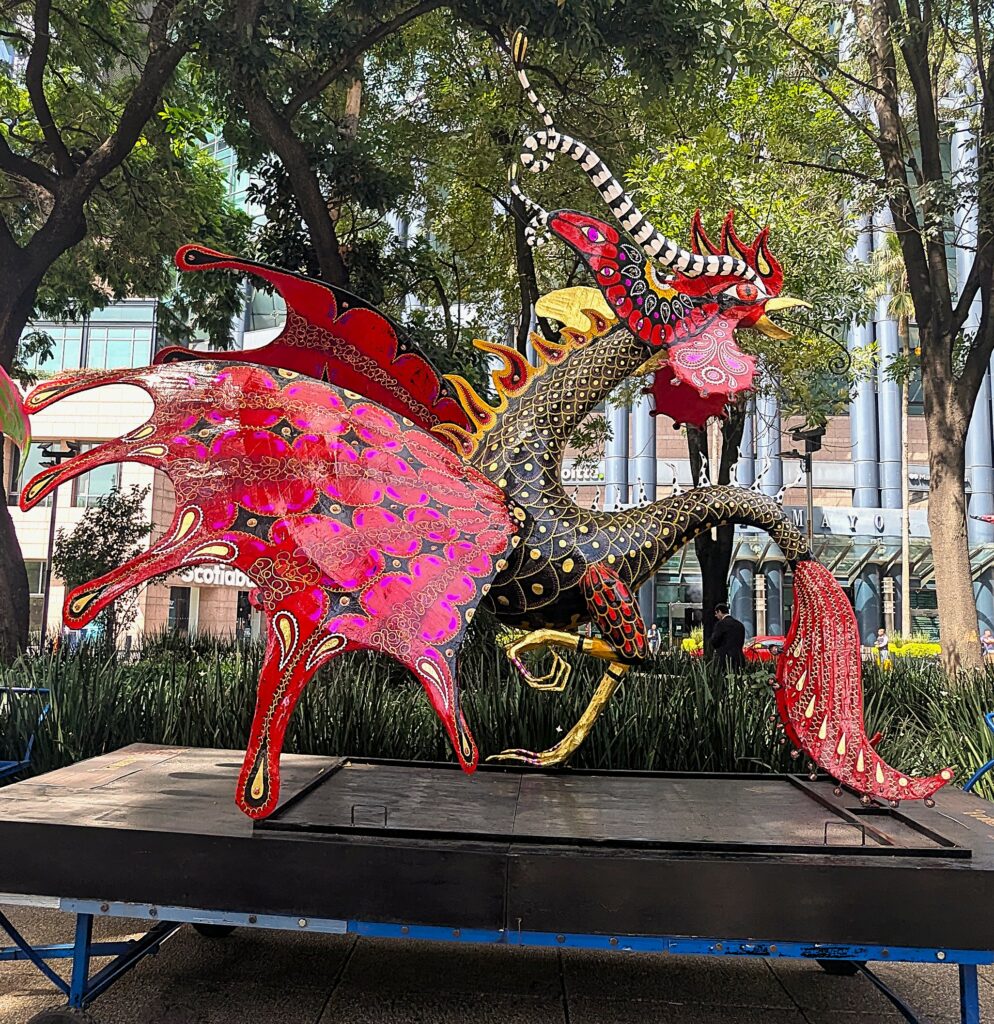
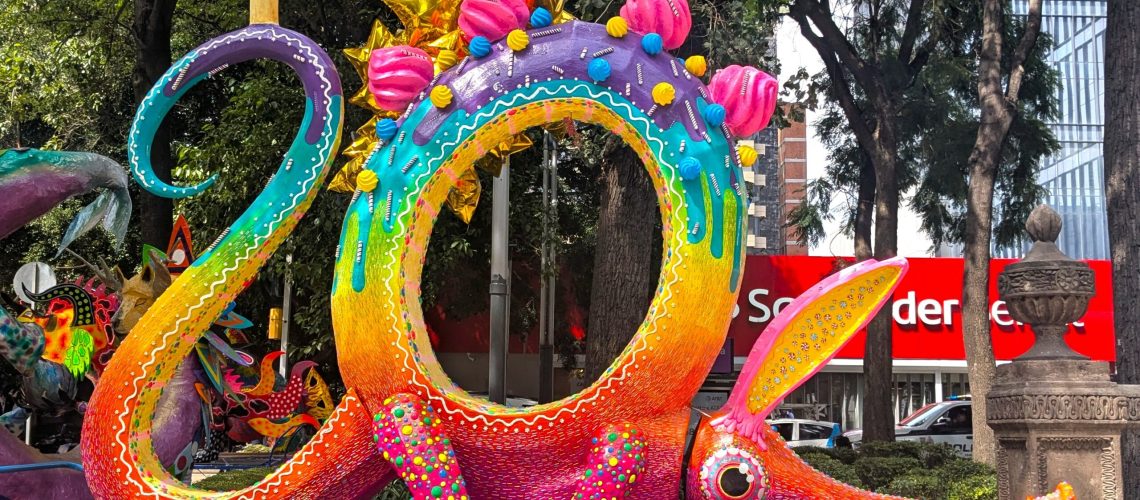
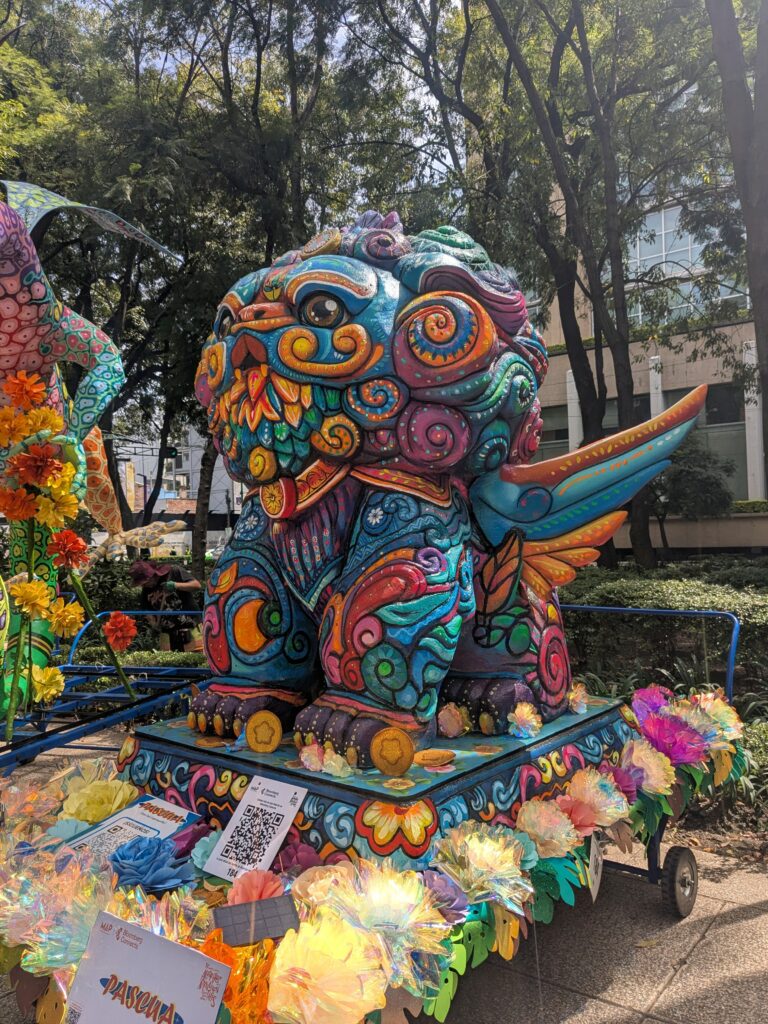
The now-iconic Muertos Parade in Mexico City was an invention in the 2015 James Bond movie “Spectre”, taken up and continued by the city. The exhibition of wonderful giant “alebriijes” along Reforma Avenue only started 18 years ago, as a parade and open contest organized by the Museo de Arte Popular. Just in the past 5 years or so, we now have an annual parade of Catrinas, a night-time bicycle ride with people dressed for Muertos, the big Muertos parade and massive altars set up in public spaces throughout the city. In a city of over 20 million – with the majority being low-income – opportunities for free entertainment are embraced with great gusto. I love seeing the streams of Mexicans of all ages dressed up for Muertos, on buses and the subway, going to Centro to walk in the parade. This side of the festivities are fully public, meant to be enjoyed en masse, attended mainly by locals but also with a large contingent of foreigners coming to experience this joyful celebration of life and its eternal companion, death.
It is our hope that you come and enjoy Día de Muertos in a way that respects the private side while fully enjoying and participating the public side of this festival!

